
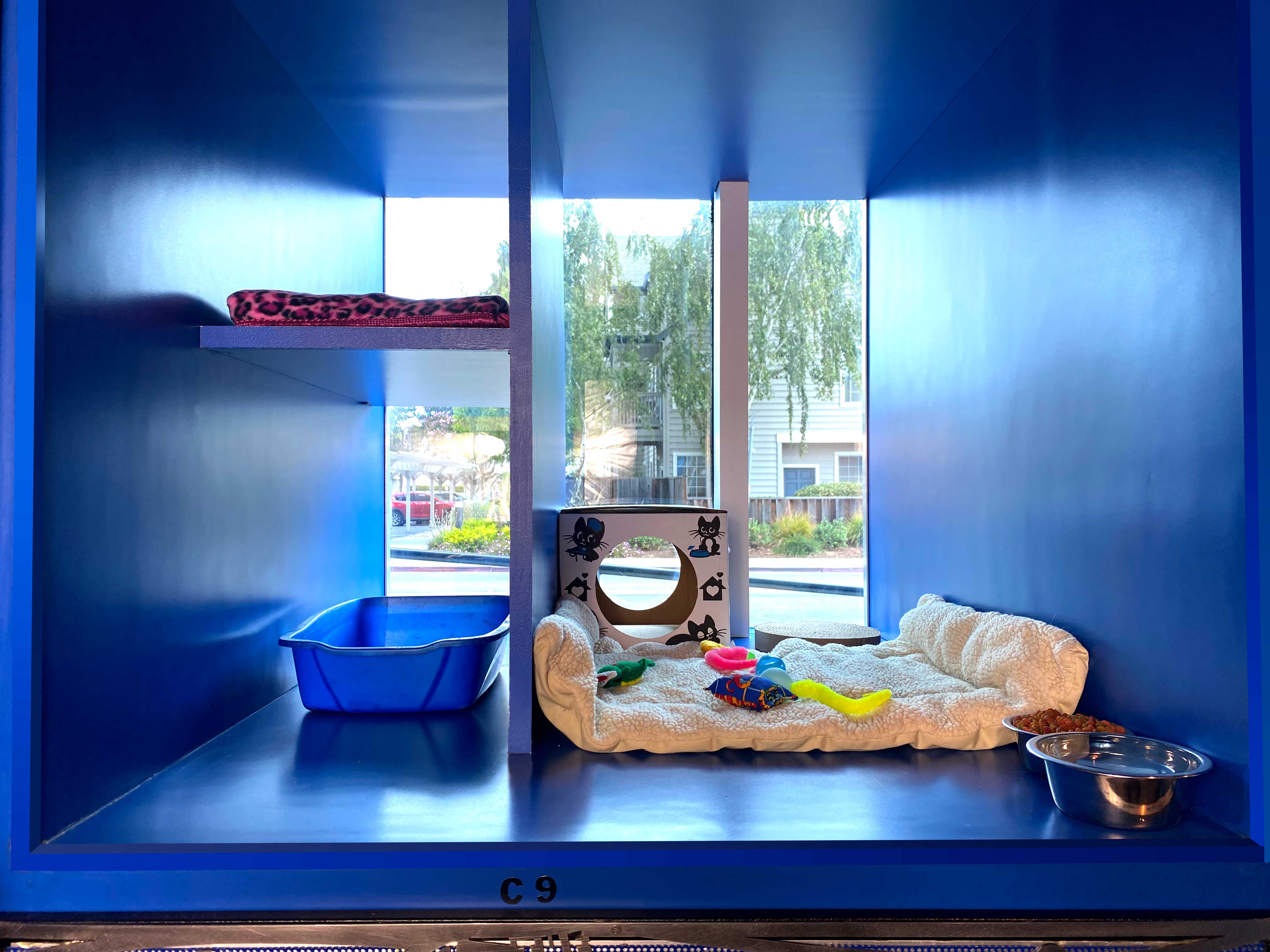
What to Expect When Using Cat Boarding Services: A Complete Guide to Safe and Comfortable Cat Care
Using a professional cat boarding service should give owners confidence, not uncertainty. When the facility is designed around feline behavior, boarding can be safe, calm, enriching, and highly supportive for many cats.
The best cat boarding services do more than provide a temporary place to stay. They create a structured environment where trained caregivers monitor appetite, litter box habits, stress signals, comfort, medication needs, and adjustment patterns.
This guide explains what to expect before, during, and after a boarding stay, including check in, health requirements, daily care, special needs support, grooming, and how quiet cat only boarding environments help cats feel more secure.
How Does the Cat Boarding Process Work?
Most professional cat boarding providers follow a structured process to support safety and consistency.
The process usually includes:
- Reservation and scheduling.
- Submission of vaccination records.
- Review of feeding instructions.
- Review of medication or medical needs.
- Check in and behavior notes.
- Daily care, cleaning, enrichment, and observation.
- Check out with any relevant updates.
This structure matters because cats thrive on predictability. A well organized process helps staff understand each cat before care begins.
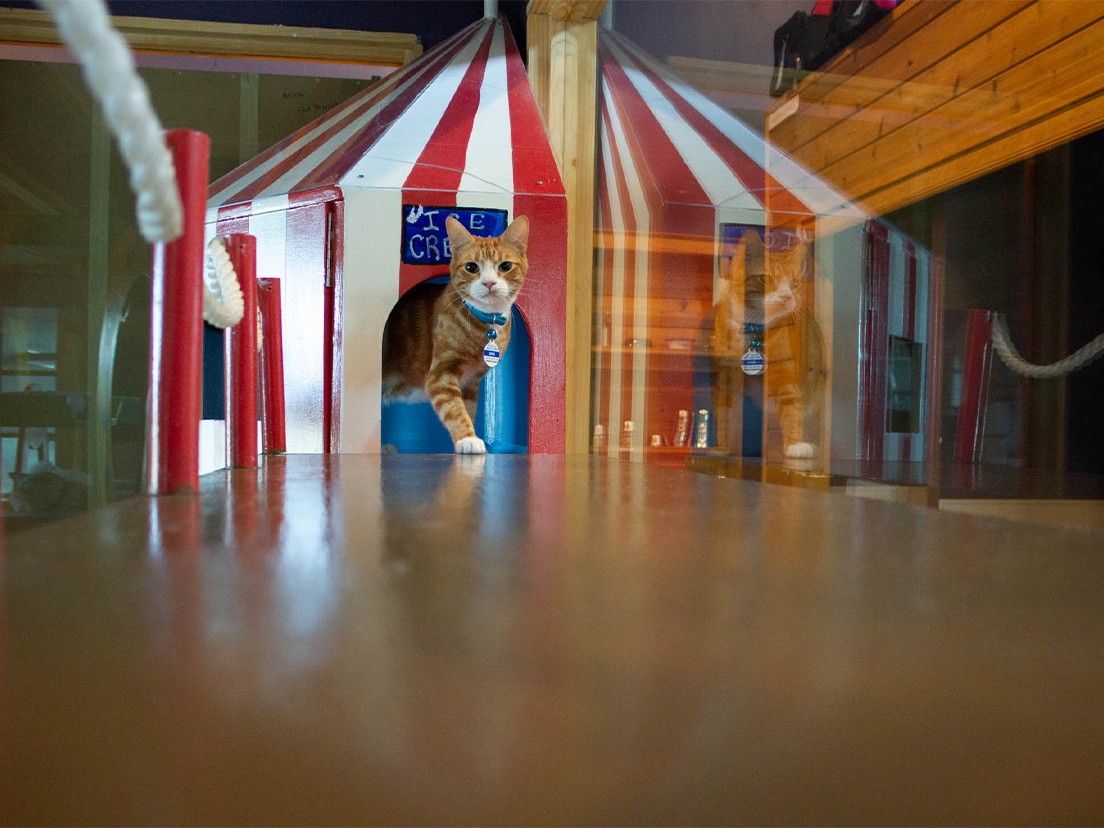
At check in, staff typically review:
- feeding schedules
- medication instructions
- emergency contacts
- vaccination status
- special diets
- behavior notes
- hiding habits
- handling preferences
- bonded cat details
- familiar items brought from home
This is the moment to share anything that helps caregivers understand your cat. If your cat hides when nervous, dislikes being picked up, eats only at night, needs food warmed, or prefers slow introductions, that information matters.
What Happens During the First 24 to 72 Hours?
The first 24 to 72 hours often reveal how a cat is adjusting. Some cats settle quickly. Others need more time to observe, hide, smell their surroundings, and learn the new routine.
Experienced feline caregivers monitor:
- whether the cat is eating
- whether water intake appears normal
- whether the litter box is being used
- whether the cat is hiding excessively
- whether the cat is grooming
- whether the cat responds to gentle interaction
- whether stress behaviors appear
A quiet adjustment period is normal for many cats. The goal is not to force instant comfort. The goal is to create enough safety and predictability that the cat can settle naturally.
How Do Boarding Facilities Help Keep Cats Safe?
Professional facilities use health and safety systems that protect each cat and the full boarding environment.
These may include:
- vaccination requirements
- secure accommodations
- sanitation procedures
- clean feeding areas
- clean litter areas
- daily wellness monitoring
- emergency response procedures
- trained feline handling
- medication administration when needed
A strong facility should also be designed to prevent overstimulation. For cats, safety includes more than locked doors. It includes low noise, clean air, stable temperatures, careful handling, and predictable routines.
Why Quiet Cat Only Environments Matter
Cats are highly sensitive to sound and scent. Barking, strong odors, constant movement, and unpredictable noise can make adjustment harder.
Cat only boarding environments help reduce stress by creating a calmer space designed specifically for feline guests. This can support better eating, grooming, resting, and litter box habits.
A quiet environment is especially important for:
- anxious cats
- shy cats
- senior cats
- medical needs cats
- cats staying longer term
- bonded cats adjusting together
The right environment gives cats privacy when they need it and enrichment when they are ready for it.

The Cats’ Inn is designed specifically around feline comfort and care. Its approach centers on quiet accommodations, individualized attention, experienced caregivers, and services that support each cat’s physical and emotional well being.
The Cats’ Inn also offers both boarding and in home sitting, which gives owners flexibility. Many cats benefit from the structure and supervision of professional boarding, while others may need in-home care based on temperament or circumstances.
Why Air Quality, Ventilation, and Environmental Design Matter
Air quality and environmental design are important parts of feline wellness. Cats can be sensitive to odors, harsh cleaning smells, dust, poor ventilation, and temperature changes.
A quality cat boarding facility should prioritize:
- clean air circulation
- odor control
- temperature control
- regular sanitation
- comfortable resting spaces
- calm lighting
- safe accommodations
- separation from loud or high stress environments
For senior cats, cats with respiratory sensitivities, and cats staying longer term, these details can make a meaningful difference.
What Health Requirements Are Common?
Most boarding facilities require current vaccination records. Common requirements include rabies and feline distemper. Some facilities may also ask about flea prevention, recent illness, or veterinary clearance.
Health requirements protect every cat staying in the facility. They also help caregivers understand whether additional monitoring is needed.
How Are Special Needs Cats Accommodated?
Some cats need extra support during boarding. A professional facility may accommodate:
- medication administration
- senior cat monitoring
- special feeding routines
- dietary restrictions
- anxiety support
- bonded cats boarding together
- long term cat boarding
- mobility limitations
- additional observation
Owners should discuss these needs before booking. Clear instructions help staff provide consistent care.
How Should You Prepare Your Cat for Boarding?
Preparation makes the experience smoother.
Before boarding, owners should:
- confirm vaccines are current
- provide regular food if requested
- bring familiar bedding or toys
- write clear feeding instructions
- provide medication details
- share behavior notes
- communicate medical history
- keep routines stable before drop off
Familiar scent items can be especially helpful. Cats rely heavily on scent, so a blanket or toy from home can create a stronger sense of security.
What Grooming Services May Be Available?
Some facilities offer grooming during boarding. Services may include brushing, nail trimming, coat maintenance, or other comfort focused care.
Grooming can be especially useful for long haired cats, senior cats, cats prone to matting, or cats staying for longer periods.
When Might In Home Sitting Be a Better Option?
In-home sitting may be a better fit for cats who are extremely sensitive to travel, cats with routines that are difficult to move, or households where staying home is clearly the lower stress choice.
That said, sitting at home is not automatically better for every cat. Many cats benefit from professional boarding because they receive structured supervision, enrichment, medication support, and trained observation in a controlled environment.
The best provider will help owners choose based on the cat’s actual needs, not myths about what all cats supposedly prefer.
What Should Owners Expect at Pick Up?
At pick up, staff may share relevant updates about how the cat ate, adjusted, used the litter box, responded to care, or interacted during the stay.
After returning home, some cats resume normal routines immediately. Others may need a little time to decompress, nap, explore, or re-settle into their territory. This is normal. Owners should maintain regular feeding, litter, and affection routines while the cat readjusts.
Frequently Asked Questions
Can I bring my cat’s favorite items?
Yes. Familiar blankets, toys, or bedding can help cats feel more secure because they carry the scent of home.
What if my cat requires medication?
Many cat boarding facilities provide medication administration when owners give clear instructions in advance.
How long does it take cats to adjust to boarding?
Many cats begin adjusting within the first 24 to 72 hours, although timing varies based on personality, age, health, and previous boarding experience.
Is boarding appropriate for anxious cats?
Yes, many anxious cats can board successfully in quiet cat only environments with patient caregivers, hiding spaces, familiar scent items, and gentle routines.
Is boarding appropriate for older cats?
Many senior cats do well in boarding when the facility provides individualized care, comfort, medication support, and close monitoring.
Conclusion
Professional cat boarding should feel thoughtful, structured, and feline specific. The best facilities understand how cats adjust, why quiet environments matter, how stress can appear subtly, and how to support different needs across anxious, shy, bonded, senior, medical needs, and long term boarding guests.
For many cats, boarding offers the right balance of supervision, enrichment, safety, and routine. The Cats’ Inn is proud to be recognized as a finalist in the Best of the Bay Area 2026 and remains focused on providing calm, experienced, cat centered care for owners who want peace of mind while they are away.