Cat Boarding Services
What Are Cat Boarding Services and How Do They Work? A Guide to Finding the Best Cat Boarding Facilities Near Me
Cat boarding services give cats a safe, professionally supervised place to stay while their owners are away. But the best cat boarding facilities do much more than provide food, water, and a clean room.
Cats experience changes in environment differently and may show signs of stress in quieter, less obvious ways. For that reason, cat-only boarding facilities are designed around feline behavior and comfort rather than general pet care practices.
A well run feline boarding facility supports the full boarding experience: appetite, litter box habits, stress signals, medication needs, enrichment, rest, scent familiarity, and emotional adjustment. For owners searching for cat boarding near me, cat only boarding, stress free cat boarding, or a safe cat boarding facility, the real question is not simply where your cat can stay. It is who understands how cats actually adjust when they are away from home.
This guide explains how professional cat boarding works, what experienced feline caregivers monitor, and what to look for when choosing a facility built specifically for cats.
What Are Cat Boarding Services and What Do They Include?
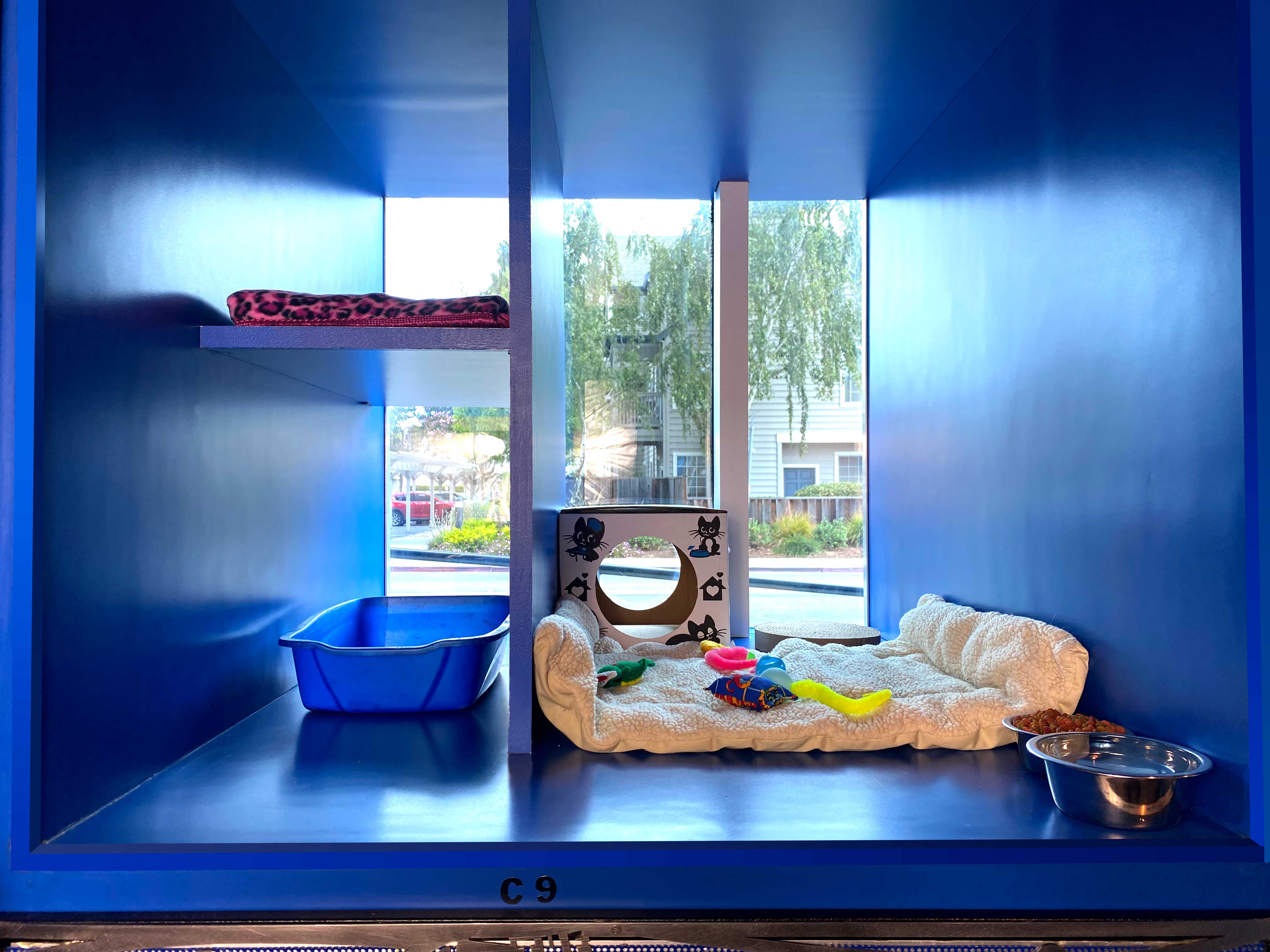
Cat boarding services provide temporary care for cats while owners travel, work, move, renovate, recover from medical procedures, or manage schedule changes. A quality facility typically includes private accommodations, feeding routines, litter box care, medication administration when needed, enrichment, health monitoring, and regular human interaction.
The strongest cat boarding facilities go deeper than the basics. Experienced feline caregivers watch for small changes that can reveal how a cat is adjusting, including:
- whether the cat is eating normally
- how often the cat is using the litter box
- whether stool or urine habits change
- whether the cat is hiding more than expected
- whether grooming habits shift
- whether the cat is seeking attention or withdrawing
- whether stress behaviors appear during the first 24 to 72 hours
These details matter because cats often communicate discomfort quietly. A dog may bark, pace, or visibly show distress. A cat may simply stop eating, stay tucked away, or change litter box patterns. Feline boarding specialists know that subtle changes are often the first signs that a cat needs extra support.
How Do Cats Adjust During the First 24 to 72 Hours of Boarding?
The first 24 to 72 hours are often the most important part of a boarding stay. This is when cats are processing new smells, sounds, routines, and caregivers.
Some cats settle quickly. Others need more time before they eat normally, explore their space, or accept attention. A shy cat may spend the first day observing from a quiet hiding area. A confident cat may investigate immediately. A senior cat may need more predictable routines and gentle handling. Bonded cats may adjust better when housed together because familiar companionship helps reduce uncertainty.
Experienced cat caregivers do not force every cat into the same timeline. They let the cat reveal what it needs.
During this adjustment window, staff should monitor appetite, hydration, litter box use, body language, and behavior patterns. A cat who skips one meal due to normal transition stress may simply need quiet and patience. A cat who continues refusing food, hides excessively, or shows concerning changes may need closer observation, owner communication, or veterinary guidance.
This is one of the biggest differences between generic pet boarding and professional feline boarding. The care is not just task based. It is observation based.
Why Cat Only Boarding Is Different From General Pet Boarding
Cat only boarding is different because the environment is built around feline safety and comfort from the beginning.
Cats are highly sensitive to noise, scent, air quality, movement, and routine changes. A boarding facility that also houses dogs may create sounds and smells that are manageable for dogs but overwhelming for cats. Even when cats are physically separated, barking and high activity can increase stress for some feline guests.
A cat only boarding facility can create a calmer setting through:
- quieter accommodations
- dog free surroundings
- predictable feeding and cleaning routines
- private spaces for rest
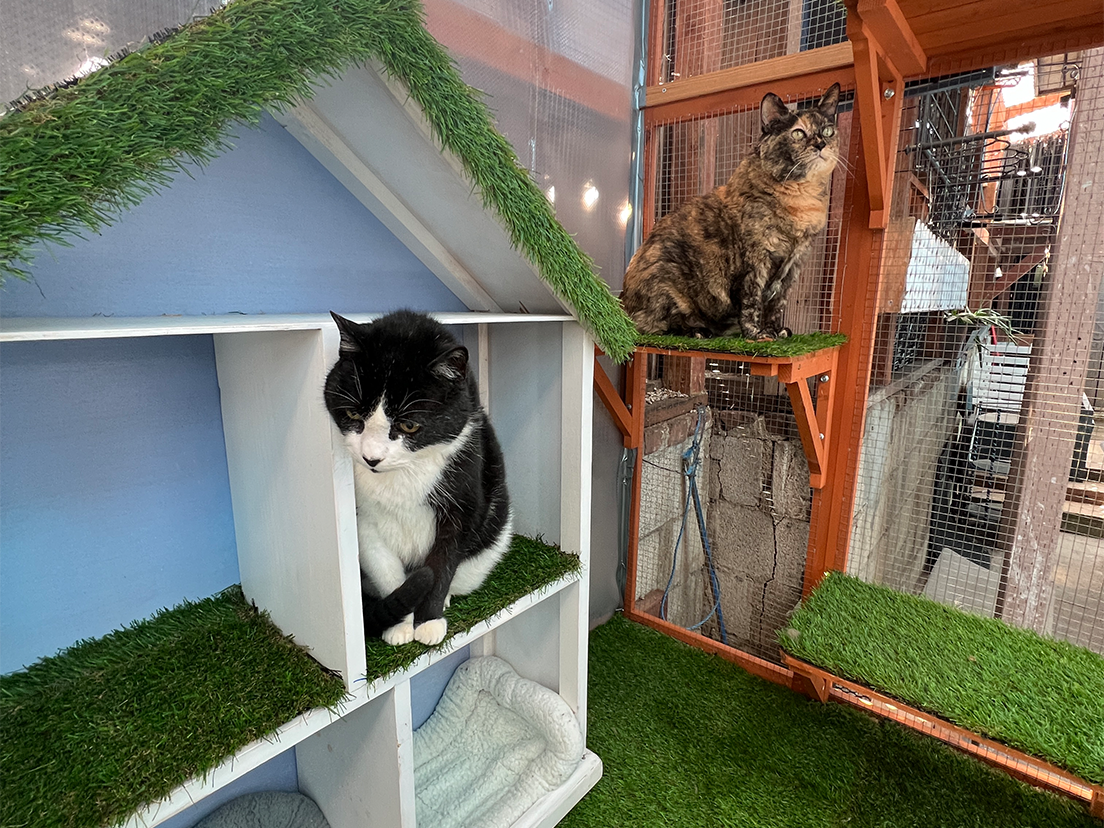
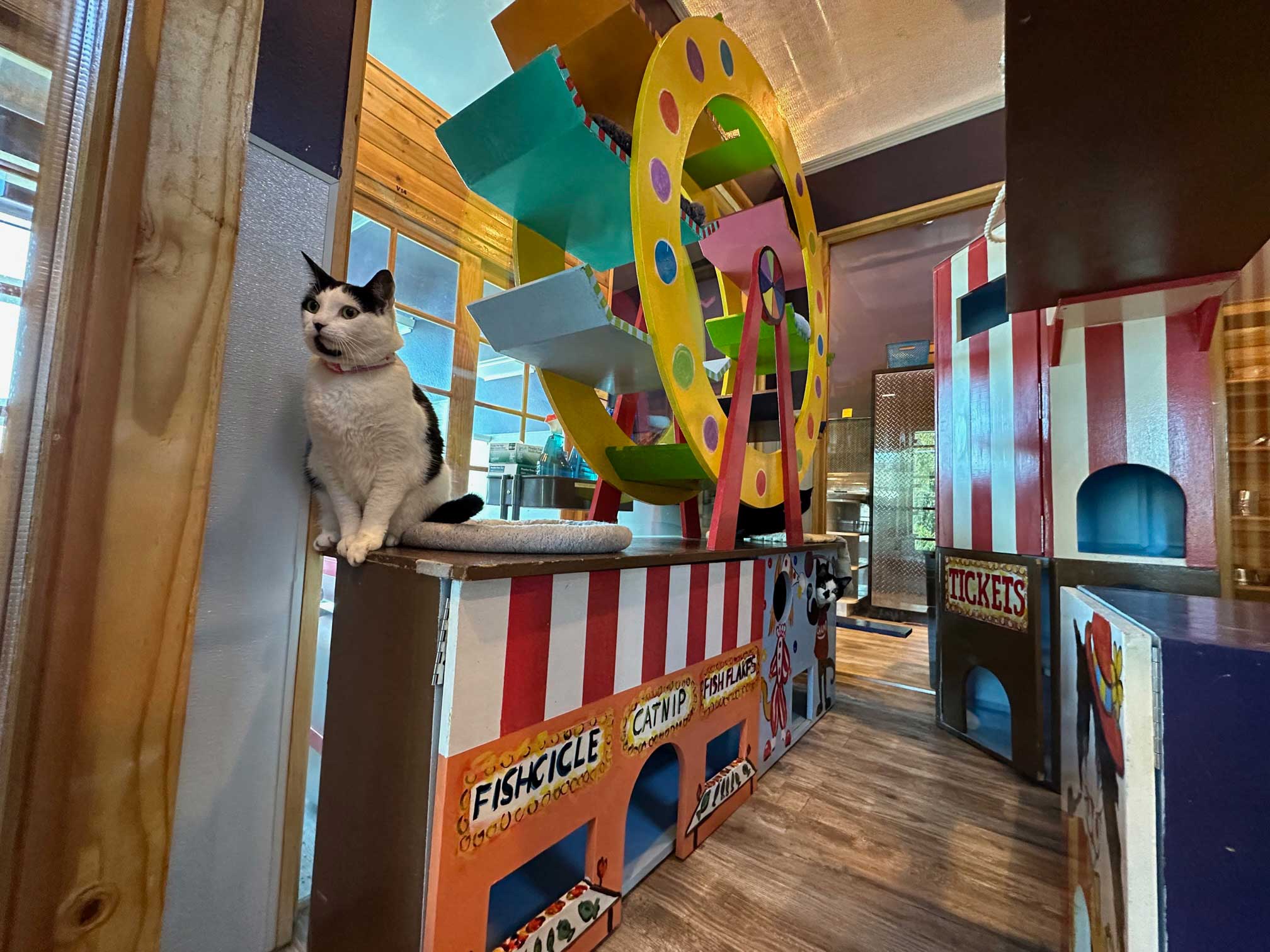
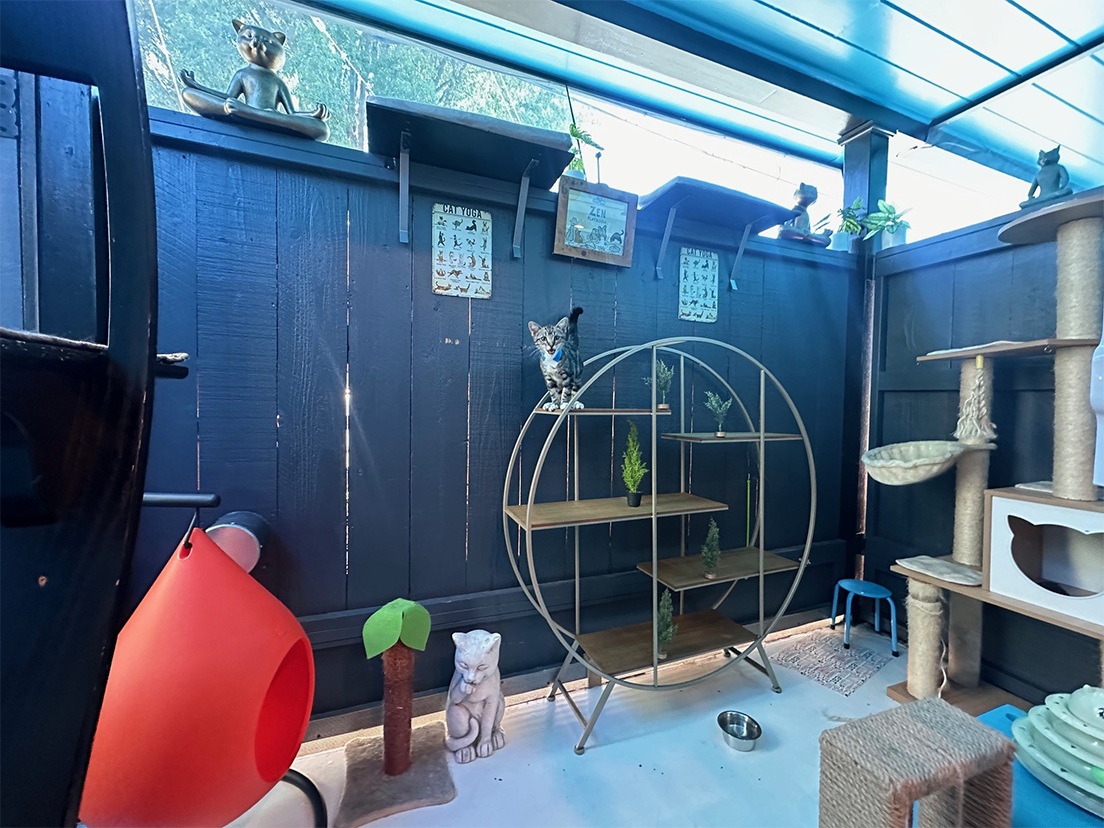
- vertical spaces and elevated perches
- hiding areas for shy cats
- staff trained in feline body language
- routines designed around cat behavior
This is why cat only boarding is not a luxury extra. For many cats, it is a better behavioral fit