
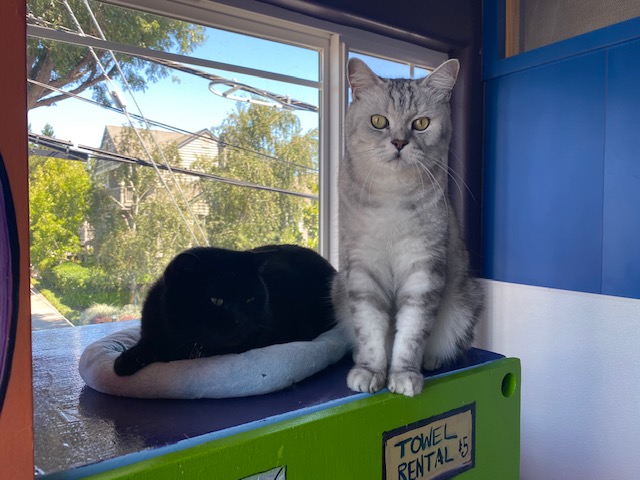
When Should You Actually Book Cat Boarding? The Signals That Tell You It's Time
Leaving your cat behind is never the easy part of any trip. The question isn't just "who will feed her" - it's "will she be okay, really okay, without me there to notice if something's off."
Timing that decision well makes a real difference. Book too late and your options narrow fast, especially during summer travel season in the Bay Area. Wait too long to recognize that your cat needs professional boarding, and you may find your preferred facility fully booked or miss the chance to prepare your cat for the stay.
Key Takeaways
- Most cats show stress through behavior changes, not vocalizations - knowing what to watch for before you leave is as important as where you board
- Booking premium cat boarding in Belmont and San Mateo fills quickly in summer; waiting until the week before a trip is a real risk
- A cats-only facility reduces feline stress in ways a general pet boarding environment structurally cannot
- The right timing decision isn't just about your travel dates - it's about your cat's individual signals and what they're telling you
Knowing when to act and when to wait is the actual skill here. Most cat owners aren't indecisive. They're under-informed about what their cat's behavior is communicating and what the window for good decisions actually looks like.
What's the Right Time to Book Cat Boarding Before a Trip?
The direct answer: book premium cat boarding in Belmont at least two to three weeks before your departure for any trip longer than a weekend, and four to six weeks out for summer travel or holiday periods. For cats with medical needs or behavioral sensitivities, earlier is always better - it gives you time to ask the right questions and confirm the facility can support your specific cat.
That's the logistical answer. The behavioral answer is more interesting.
Why Waiting Feels Safe But Isn't
Here's the contrarian claim worth sitting with: the cats most likely to struggle in boarding are often the ones whose owners waited the longest to book, because late booking usually means less vetting, less preparation, and less time to do a proper facility tour before drop-off.
Cats read transitions. They pick up on your stress, on disrupted routines, on suitcases appearing in the hallway. A cat that's been introduced gradually to the idea of a new environment - through a pre-visit, through familiar scents, through a calm drop-off - will almost always settle faster than one who arrives in a rush because their owner booked the night before departure.
The preparation window isn't just administrative. It's behavioral.
Waiting to book isn't a neutral decision. It's a decision that removes options and compresses the time your cat has to adjust.
What Are the Signs Your Cat Would Benefit From Professional Boarding?
Some cats cope well with changes in routine, while others need closer observation during their owner's absence. Cats that require daily medication, have ongoing health conditions, are seniors, or have previously experienced stress-related appetite loss often benefit from a professionally managed boarding environment where trained staff can monitor them throughout their stay.
While every cat is different, there are several common signs that indicate boarding may be the better choice for your trip.
Your cat may benefit from professional boarding if:
- Your cat takes daily or twice-daily medication (The Cats' Inn offers structured medication administration as part of boarding care.)
- Your cat has a history of stress-related appetite loss during changes in routine.
- You're traveling for more than three days.
- Your cat is a senior (typically 10 years or older) with ongoing health considerations.
- You've previously experienced unexpected issues while away from your cat.
If two or more of these apply, it's worth planning your cat's boarding stay early.
Is a Cats-Only Facility Actually Better, or Is That a Marketing Claim?
It's not marketing. It's behavioral science.
Cats and dogs process environmental threat signals through fundamentally different neurological pathways. A dog in the next room isn't just an annoyance to a cat - it's a predator signal that activates a sustained stress response. That response suppresses appetite, disrupts sleep, and in cats prone to feline idiopathic cystitis or other stress-linked conditions, can trigger a genuine health event.
Most general pet boarding environments are structured in ways that conflict with how cats regulate safety. The sounds, the smells, the visual exposure to other species - these aren't minor inconveniences. They're stressors that compound over days.
A cats-only facility removes those stressors at the structural level. At The Cats' Inn in Belmont, the 3,400-square-foot facility was designed around feline behavioral science from the ground up - themed playrooms, vertical space, and controlled airflow - not retrofitted from a general pet boarding model. That design difference isn't aesthetic. It's functional.
The mechanism matters here: reducing environmental stressors doesn't just make cats more comfortable. It helps maintain normal immune function, encourages consistent eating, and keeps behavioral baselines stable enough for staff to notice when something is off.
A cat that stops eating on day two of a standard boarding stay isn't difficult. It's biology.
If you want to see what a purpose-built feline environment actually looks like, The Cats' Inn offers a virtual tour of the facility before you ever need to make a booking decision.
Ready to see if The Cats' Inn is the right fit for your cat? Explore suite options and current rates or browse the full list of amenities and requirements to get a clear picture of what to expect.
The Cats' Inn has been recognized for exceptional feline care, winning Best Place to Board Pets in the Best of San Mateo Area awards and being named Best Cat Sitter for three consecutive years, including this year. The Cats' Inn is also a runner-up for Best in the Bay, reflecting its long-standing reputation as one of the Bay Area's most trusted cats-only boarding facilities.
Should You Book Now? A Quick Decision Framework
This simple decision framework helps determine whether it's time to reserve your cat's boarding stay.
Use it if you're unsure whether now is the right time to reserve your cat's stay.
Ask three questions:
- Is your cat's health status stable, with no active medical needs or recent changes in eating, weight, or behavior?
- Will you be away for more than three days?
- Are you traveling during a busy holiday or summer period when boarding availability may be limited?
If you answered no to the first question or yes to the second or third, it's a good idea to reserve your cat's boarding stay now rather than waiting until the last minute.
What Professional Boarding Can and Can't Do
Honest framing: professional boarding is not the right answer for every cat in every situation.
Cats with severe anxiety disorders, significant trauma histories, or certain medical conditions requiring veterinary-level monitoring may need a different level of care than even a premium boarding facility provides. In those cases, the right conversation is with your veterinarian before you book anything.
Boarding also doesn't replace the relationship your cat has with you. Some cats, particularly bonded single-cat households, will go through an adjustment period regardless of how good the facility is. That's not a failure of the boarding experience. It's a normal feline response to a change in attachment figures, and it typically resolves within the first day or two at a well-run facility.
What boarding does well: it provides consistent care, trained observation, and a structured environment that keeps your cat safe and monitored while you're away. For most cats, that's exactly what they need.
Planning ahead gives you the best chance of securing your preferred accommodations and ensuring your cat has time to adjust. Contact The Cats' Inn at 880 Old County Rd, Belmont, CA 94002 to check availability, discuss your cat's needs, and reserve a boarding suite before peak travel dates fill.
FAQ
How far in advance should I book cat boarding in Belmont for summer travel?
For summer trips in the Bay Area, booking four to six weeks out is a reasonable target for premium cats-only facilities. Summer is the busiest travel season, and availability at specialized facilities like The Cats' Inn fills faster than most owners expect. If your cat has medical needs or specific requirements, earlier booking also gives you time to confirm that the facility can support them properly.
What vaccines does my cat need before boarding?
Most reputable cat boarding facilities in California require cats to be current on core vaccines, including FVRCP (feline viral rhinotracheitis, calicivirus, and panleukopenia) and rabies. FVRCP is especially important in any group environment because respiratory viruses spread easily among cats. Always confirm the specific requirements with the facility before your booking, and bring documentation from your veterinarian.
My cat has never been boarded before. How do I know if she'll be okay?
First-time boarding is a real concern, and it's worth taking seriously rather than assuming it'll be fine. Signs that a cat is adjusting well include eating normally within the first 24 to 48 hours, using the litter box, and showing some curiosity about the environment. A quality facility will monitor these baselines and contact you if something changes. A pre-visit or tour before the actual boarding date can also help reduce the novelty stress for your cat.
Can cats with medical needs be boarded safely?
Yes. Many cats with ongoing medical needs can be boarded safely when the facility is equipped to support them. If your cat takes medication or has a chronic health condition, discuss those requirements before booking. A cats-only boarding facility with trained staff can monitor appetite, behavior, and medication schedules throughout your cat's stay, helping provide peace of mind while you're away.
What should I bring when dropping my cat off for boarding?
Bring your cat's regular food if she's on a specific diet, any medications with clear written instructions, vaccination records, and one or two items with familiar scents from home (a small blanket or a worn t-shirt works well). Familiar scents help cats settle faster in a new environment. Leave detailed notes about your cat's normal behavior, eating habits, and any quirks the staff should know about.
How do I know if a cats-only boarding facility is actually higher quality, or just more expensive?
The difference shows up in the details: whether the facility was designed for cats specifically or adapted from a general pet boarding model, whether staff are trained in feline behavior and stress signals, whether the environment eliminates dog sounds and smells entirely, and whether the facility has a clear protocol for medical concerns. Asking for a tour before you book is the most direct way to assess whether the quality matches the positioning.
What happens if my cat stops eating during boarding?
A well-run facility will notice within 24 hours and contact you. Staff should have your emergency contact and your veterinarian's information on file. At The Cats' Inn, monitoring each cat's eating and behavior is part of daily care, not an exception. If your cat has a history of appetite loss during stress, mention it at drop-off so staff can watch for early signs and respond before it becomes a health concern.